
Packaging Testing & Approval
UN Dangerous Goods Testing
Independent, NATA-accredited testing for dangerous goods packaging — so you can prove it meets the UN Recommendations and ADG Code before it ships, with Falcon managing your approval application from start to finish.
NATA-accredited to ISO/IEC 17025 · 38 years of testing expertise · Independent & Australian-owned
What UN dangerous goods testing proves
UN dangerous goods packaging testing confirms that a container — a drum, jerrican, box, IBC or other package — can safely hold and transport dangerous goods under the UN Recommendations on the Transport of Dangerous Goods. Packaging is tested against a specific UN performance level, and once it passes, it can be marked with the UN packaging symbol and legally used to ship dangerous goods.
Testing is required whenever you manufacture, import, repackage or substantially modify packaging intended to carry dangerous goods — it applies to the packaging itself, independent of any testing done on the goods it will carry.
Who this is for
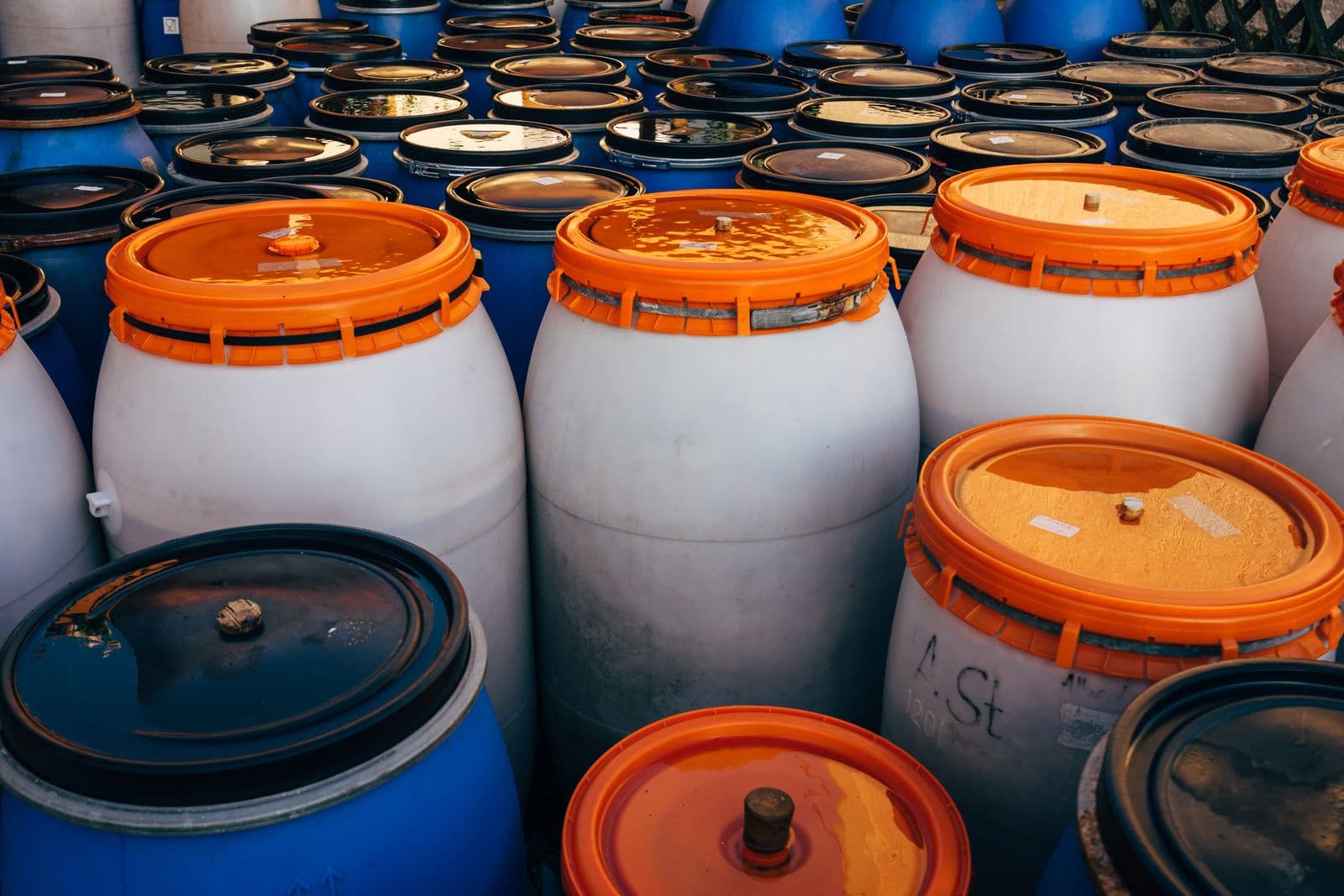
Packaging we test
If your packaging isn't listed here, get in touch — this covers the packaging types we see most often, not the full extent of what we can assess.
Tests we perform
Design-type testing carried out to the methods set out in the UN Recommendations and ADG Code.
Standards & regulatory frameworks
We test to the frameworks that determine whether your packaging can legally be sold, transported and shipped.
UN Recommendations on the Transport of Dangerous Goods
The international model regulations that set UN packaging performance levels, test methods and marking requirements.
Australian Dangerous Goods (ADG) Code
Australia's implementation of the UN Recommendations, governing dangerous goods transport by road and rail.
IATA Dangerous Goods Regulations
Additional packaging and documentation requirements that apply when dangerous goods are transported by air.

Independent testing is the difference between assumed compliance and proven compliance.
The testing pathway
A straightforward path from an initial enquiry to a certified, correctly marked package.
Scope & standards
We confirm the UN packaging group and performance level, and the Class-specific requirements that apply to your packaging.
Sample submission
You send representative production samples, along with details of the substance and transport modes involved.
Testing
We test your packaging to the relevant UN Recommendations and ADG Code methods in our laboratory.
Certification & marking
You receive a test report and the correct UN marking specification to apply to your packaging.
Approval & revalidation
We manage your packaging design approval application with your state's Competent Authority from start to finish, and guide you through revalidation when your five-year UN certification is due to expire.
What we'll need from you
- Representative production samples of your packaging
- Details of the substance it will carry, including UN Class and Packing Group if known
- Your intended transport modes — road, rail, sea or air
- Timeframes for your project
Beyond the test report
In Australia, dangerous goods packaging design approvals are issued by each state's Competent Authority, and applications must be supported by a test report from a NATA-accredited laboratory or an equivalent. Because our testing and certification follow the UN Recommendations that also underpin international frameworks such as the IATA Dangerous Goods Regulations, the same UN-marked package is recognised for international transport as well as domestic use.
We don't just hand you a test report — our team manages the packaging design approval application on your behalf from start to finish, including documentation, marking information and submission to your state's Competent Authority, so testing leads directly to an approved, shippable package.
Why clients test with Falcon
NATA-accredited to ISO/IEC 17025
Our mechanical testing is independently accredited, and our reports satisfy the NATA-accredited test report requirement of every state's Competent Authority.
38 years of testing experience
Testing dangerous goods packaging since 1988.
Independent & Australian-owned
A specialist testing laboratory, not a division of a packaging supplier — so your result is independent and unbiased.
Why getting this right matters
Frequently asked questions
How long is UN packaging certification valid?
In Australia, UN packaging certification is valid for five years from the date of the design-type test. Revalidation testing is required before it expires to confirm the packaging still performs to the required standard.
Do I need a NATA-accredited test report for a dangerous goods packaging approval?
Yes. In Australia, each state's Competent Authority requires dangerous goods packaging design approval applications to be supported by a test certificate or report from a NATA-accredited testing facility, or an equivalent. Falcon's test reports satisfy this requirement, and we manage the application on your behalf.
What happens if my packaging fails a test?
We'll explain exactly which test wasn't met and why, so you can work out what needs to change — a material, a closure, a wall thickness — before resubmitting for retesting.
Does Falcon manage the approval application, or just the testing?
We manage your packaging design approval application from start to finish — preparing the test report, supporting documentation and marking information, and submitting the application to your state's Competent Authority on your behalf.
What packaging can Falcon test?
Drums, jerricans, pails, boxes, bags, IBCs, FIBCs and most other packaging types used for dangerous goods. See the packaging list above, or contact us if you're not sure your packaging is covered.
Do you test to international standards as well as Australian ones?
Yes. In addition to the ADG Code, we test to the UN Recommendations on the Transport of Dangerous Goods, and can advise on IATA Dangerous Goods Regulations requirements where packaging will also travel by air.
Related services
Request a testing quote
Tell us about your packaging and we'll come back with a clear scope, timeframe and price for UN dangerous goods testing.