
Physical & Mechanical Testing
Testing Capabilities
The individual test methods behind every Falcon service — from vibration and drop testing to pressure and tensile testing. Use this page to find the right method for your product, or see how it fits into a larger UN dangerous goods, product or transport testing program.
NATA-accredited to ISO/IEC 17025 · 38 years of testing expertise · Independent & Australian-owned
Find the right test method
Every Falcon service — UN dangerous goods packaging testing, product testing, and transport and environmental simulation — is built from a common set of physical and mechanical test methods. This page describes each method on its own terms: what it tests and which of our services rely on it, so you can identify the right test even if you're not sure which service category it falls under.
Vibration Testing
Reproduces the vibration a product experiences on truck decks, in shipping containers and on rail wagons, to identify loosening, fatigue and packaging failure before it happens in transit.
Used in: UN DG Packaging · Product Testing · Transport Simulation · Defence Testing
Drop Testing
Drops a package or product from a specified height and orientation to confirm it survives normal handling shocks — one of the most common tests across every service we offer.
Used in: UN DG Packaging · Product Testing · Transport Simulation · Defence Testing
Shock & Impact Testing
Covers impact events beyond a simple vertical drop, including incline-impact and horizontal-impact testing that simulate rail shunting, forklift handling and braking events.
Used in: Product Testing · Transport Simulation · Defence Testing
Compression & Stack Testing
Tests how a product or package performs under sustained stacking loads — in a warehouse, a shipping container or a vehicle — using programmable static and cyclic loading.
Used in: UN DG Packaging · Product Testing · Transport Simulation
Temperature & Humidity Testing
Conditions products and packaging across a wide temperature and humidity range to replicate the climate extremes a shipment can pass through, from a hot shipping container to a cold air-freight hold.
Used in: Product Testing · Transport Simulation · Defence Testing
Leak Testing
Confirms a container's closures and seams hold their contents under pressure, checking for leakage before a package is approved to carry liquids or dangerous goods.
Used in: UN DG Packaging · Product Testing
Hydrostatic Pressure Testing
Applies internal liquid pressure to a container to confirm it withstands the pressures it may experience in transport and handling without failure.
Used in: UN DG Packaging · Product Testing
Pressure Differential & Vacuum Testing
Tests how packaging responds to pressure changes — including the reduced-pressure conditions experienced during air transport.
Used in: UN DG Packaging · Product Testing
Instron Tensile Testing
Measures tensile strength and material behaviour under controlled load on our Instron equipment, with programmable cyclic loading for fatigue and repeat-load assessment.
Used in: Product Testing
Custom Test Programs
Not every product fits a standard test method. We scope custom test sequences around your product, your internal specification, or a customer's specific requirements.
Used in: All Service Lines
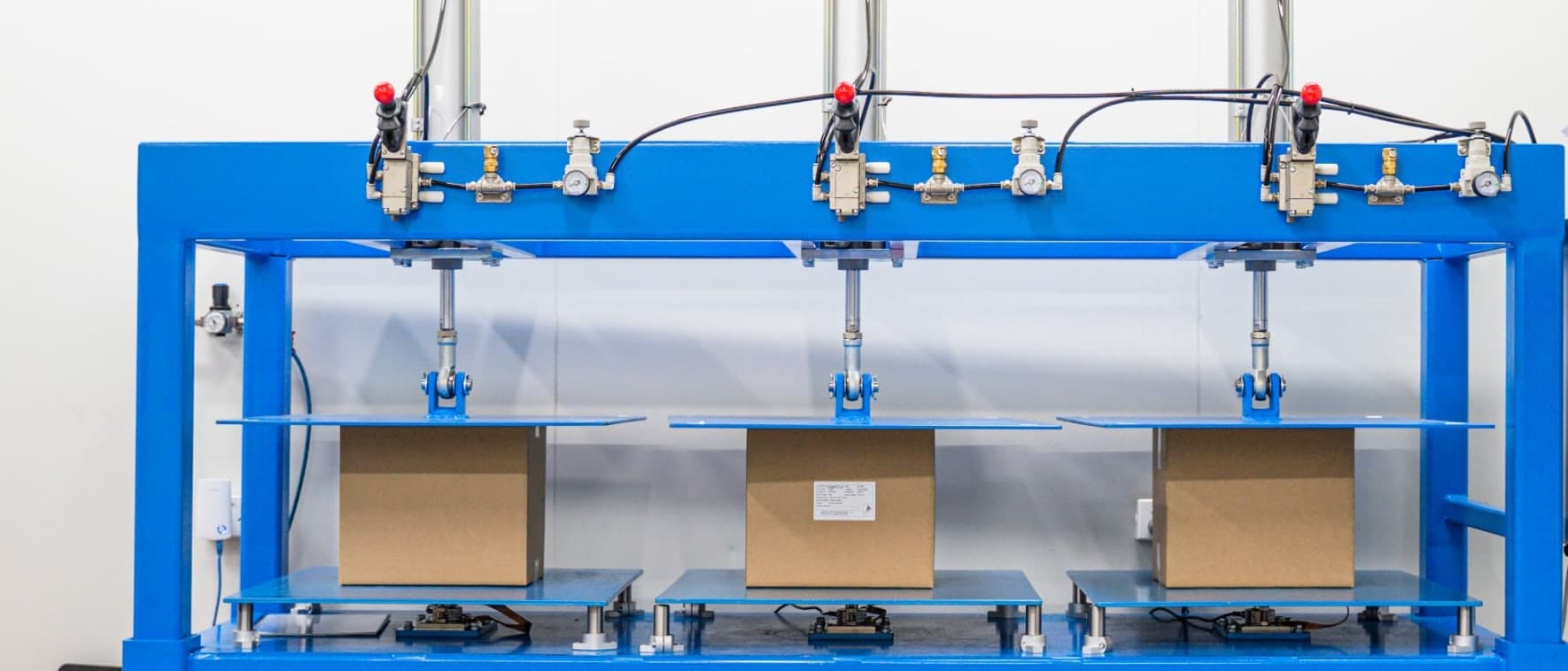
The equipment behind every result.
Frequently asked questions
Which service does a specific test method belong to?
Most test methods support several of our services — vibration testing, for example, is used in UN dangerous goods packaging testing, general product testing and transport simulation. This page describes each method itself; our service pages explain how it's applied to your specific packaging or product.
Can you combine several test methods into one program?
Yes — most real test programs, including ISTA, ASTM D4169 and UN packaging performance testing, already combine several of these methods. We can also scope a custom sequence for a requirement that doesn't fit a standard program.
Do you test to a specific standard, or just the general method?
Both — each method can be run to a named standard (AS, ISO, ASTM, UN, ISTA, MIL-STD) or scoped to your own internal specification, depending on what you need to prove.
I'm not sure which test I need — can you help?
Yes — tell us about your product and what you need to prove, and we'll recommend the right method or program.
Related services
Request a testing quote
Tell us which test method or capability you need, and we'll come back with a clear scope, timeframe and price.