

UN Dangerous Goods Packaging
4G Combination Packaging & Box Testing
UN performance testing for fibreboard boxes used as combination packaging — the outer box and inner receptacles tested and certified together, so the finished pack can be reproduced and shipped exactly as approved.
NATA-accredited to ISO/IEC 17025 · 38 years of testing expertise · Independent & Australian-owned
What is 4G combination packaging?
"4G" is the UN code for a fibreboard box. Combination packaging pairs that outer box with one or more inner receptacles — bottles, tins or pouches — specified at the time of testing. It's one of the most common packaging types for chemical manufacturers, formulators, contract packers and any business shipping dangerous goods in boxed inner containers.
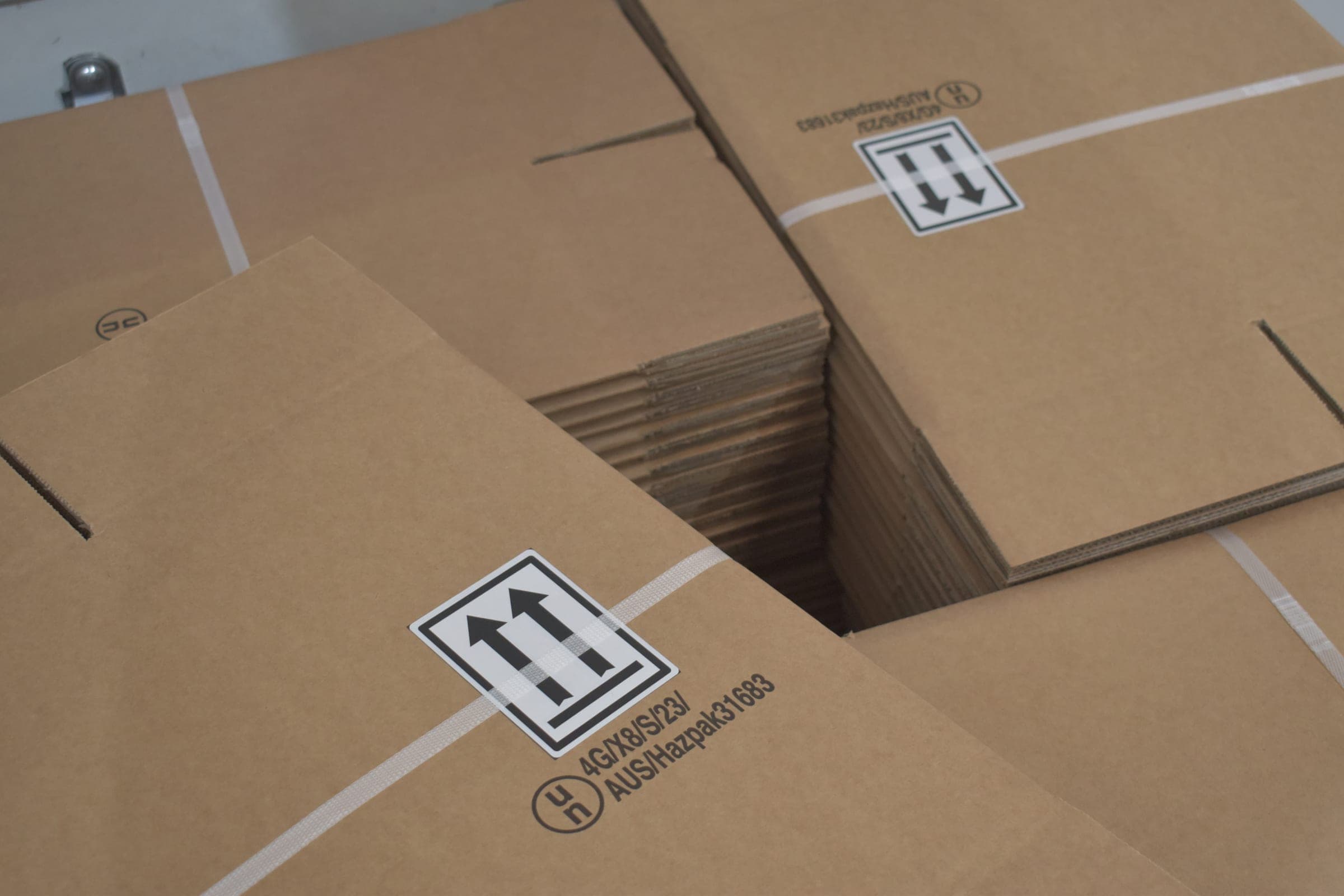
Outer & inner components
Why the packing instruction matters
Changing any component of an approved combination package can invalidate its certification.
Tests we perform
Samples are conditioned before testing, then tested as a fully assembled package.

Approved exactly as built — every layer, every time.
From enquiry to certified packaging
A condensed view of the pathway — see the full process for more detail on documentation and approval.
Scope & Configuration
We confirm your outer box, inner receptacles and the dangerous good being packed.
Sample Submission
You send fully assembled samples, packed exactly as they will be in service.
Testing
We condition and test the assembled package to the relevant UN and ADG Code methods.
Certification & Marking
You receive a test report and the UN marking specification for your packaging.
Approval Application
We prepare and submit your packaging design approval application to your state's Competent Authority on your behalf.
Why clients test with Falcon
NATA-accredited to ISO/IEC 17025
Our mechanical testing is independently accredited, giving your test reports real weight.
38 years of testing experience
Testing dangerous goods packaging since 1988.
Independent & Australian-owned
A specialist testing laboratory, not a division of a packaging supplier.
Frequently asked questions
What's the difference between a 4G and a 4GV box?
A 4G box is tested and certified with a specific inner packaging and must always be packed exactly that way. A 4GV ('V' for various) design can be used with a range of suitable inner packagings — talk to us about which fits your product.
Can I change the inner bottle or add extra padding without retesting?
Not without checking first. Combination packaging is only valid when assembled exactly as tested. Talk to us before changing any component and we'll advise whether retesting is needed.
Who typically needs 4G combination packaging testing?
Chemical manufacturers, formulators, contract packers and any business packing dangerous goods into boxed inner containers for transport.
Can Falcon test a new inner packaging configuration for an existing approved box?
Yes — get in touch with the details and we'll scope what's required.
Related services
Request a testing quote
Tell us about your box, inner packaging and what it will carry, and we'll come back with a clear scope, timeframe and price.