

UN Dangerous Goods Packaging
Large Packaging Testing
UN performance testing for large packaging — outer packaging built to hold articles or inner packagings, designed for mechanical handling, and sized well beyond a conventional package.
NATA-accredited to ISO/IEC 17025 · 38 years of testing expertise · Independent & Australian-owned
What is large packaging?
Large packaging is outer packaging containing articles or inner packagings, designed for mechanical handling, that exceeds 400 kg net mass or 450 litres capacity — while remaining no more than 3 cubic metres in volume. It sits above conventional packages and, unlike an IBC, is built to contain other packagings or articles rather than bulk liquid or solid product directly.
How large packaging differs
Standard packages
Up to 400 kg net mass or 450 L capacity — the vast majority of dangerous goods packaging.
Large packaging
Exceeds 400 kg or 450 L, up to 3 m³, containing articles or inner packagings, designed for mechanical handling.
IBCs
Hold bulk liquid or solid product directly, up to 3,000 L capacity.
Tests we perform
Testing focuses on the loads and handling large packaging actually experiences — mechanical handling and stacking, not bulk liquid containment.
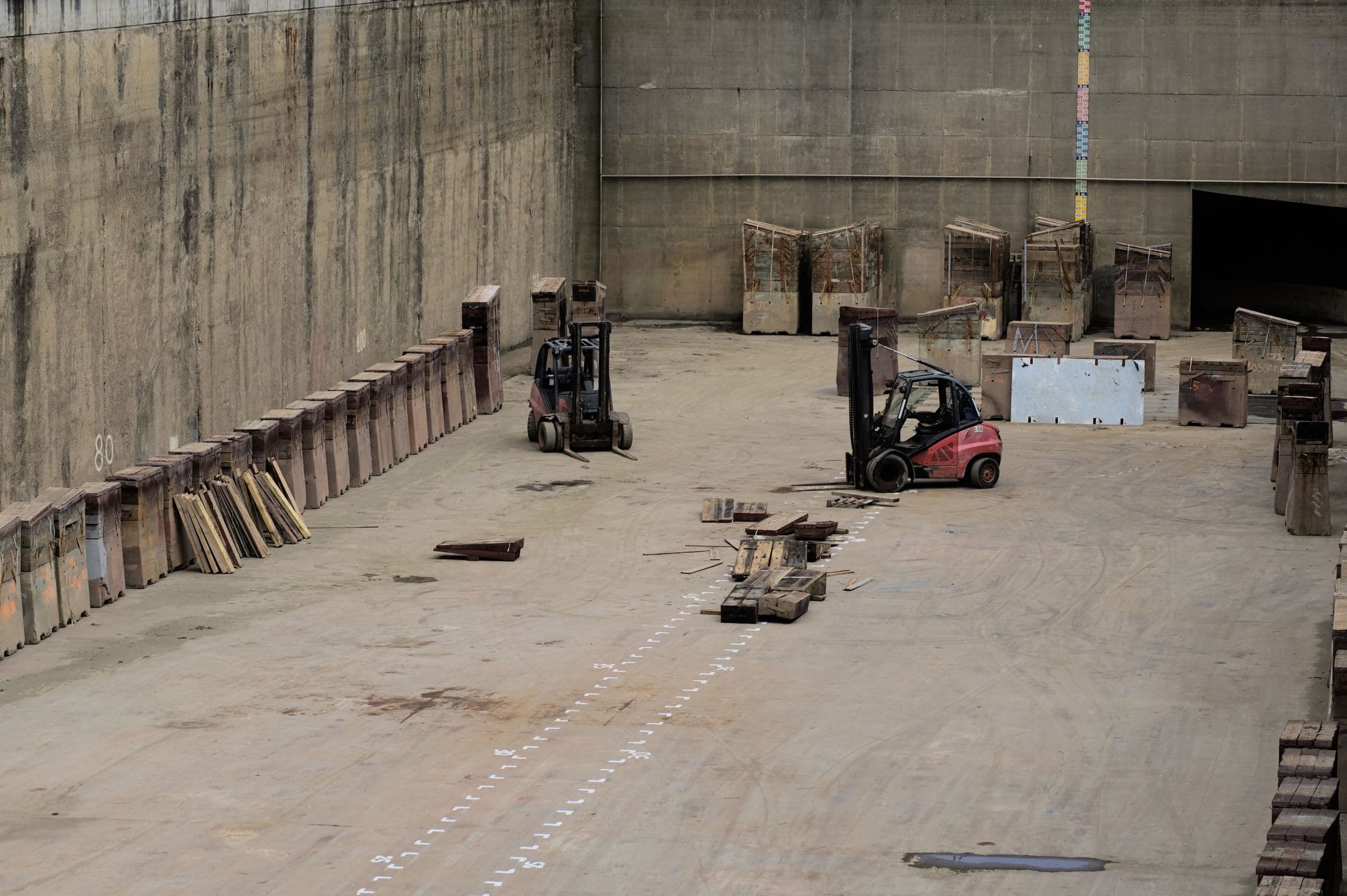
Built for mechanical handling, at a scale beyond a standard package.
From enquiry to certified packaging
A condensed view of the pathway — see the full process for more detail on documentation and approval.
Scope & Construction
We confirm your packaging's construction, dimensions and the dangerous good it will carry.
Sample Preparation
We agree how your sample will be prepared and delivered, given its size.
Testing
We test to the relevant UN Recommendations and ADG Code methods in our laboratory.
Certification & Marking
You receive a test report and the UN marking specification for your packaging.
Approval Application
We prepare and submit your packaging design approval application to your state's Competent Authority on your behalf.
Why clients test with Falcon
NATA-accredited to ISO/IEC 17025
Our mechanical testing is independently accredited, giving your test reports real weight.
38 years of testing experience
Testing dangerous goods packaging since 1988.
Independent & Australian-owned
A specialist testing laboratory, not a division of a packaging supplier.
Frequently asked questions
What counts as large packaging under the UN Recommendations?
Large packaging is outer packaging containing articles or inner packagings, designed for mechanical handling, that exceeds 400 kg net mass or 450 litres capacity but has a volume of no more than 3 cubic metres.
How is large packaging different from an IBC?
IBCs hold bulk liquids or solids directly, up to 3,000 litres. Large packaging instead contains articles or inner packagings, and is defined by exceeding 400 kg or 450 L, up to 3 cubic metres.
What materials can large packaging be made from?
Large packaging is commonly rigid fibreboard, metal, wood or plastic — get in touch with your specific construction and we'll confirm scope.
What do you need from me to start?
Details of the dangerous good, the packing group, and your packaging's construction and dimensions — we'll confirm sample requirements once we understand your design.
Related services
Request a testing quote
Tell us about your large packaging and what it will carry, and we'll come back with a clear scope, timeframe and price.